|
|
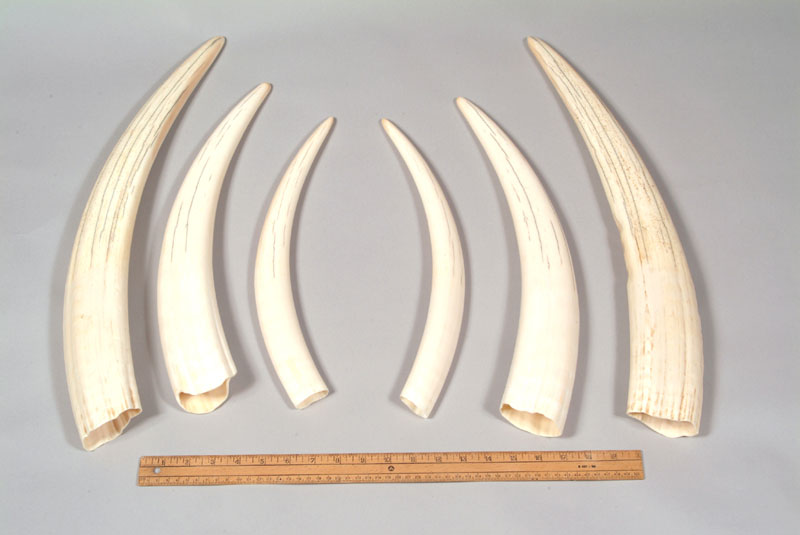
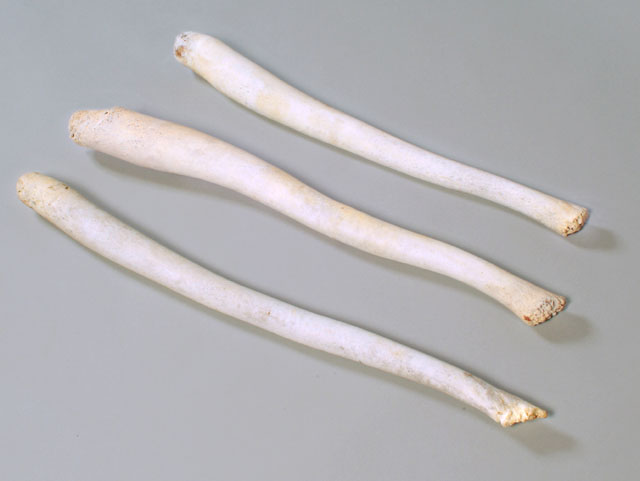
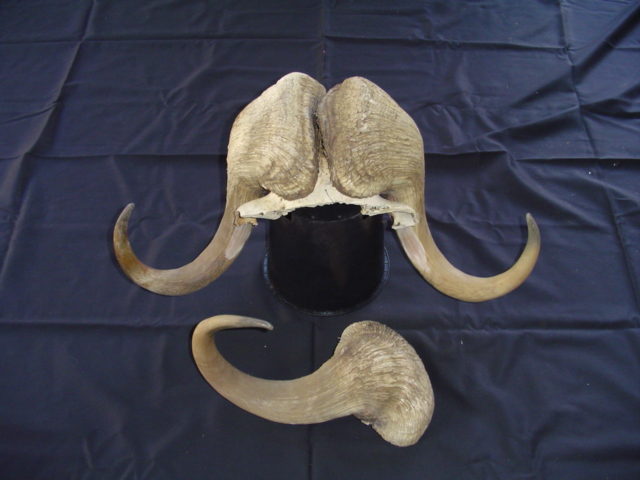
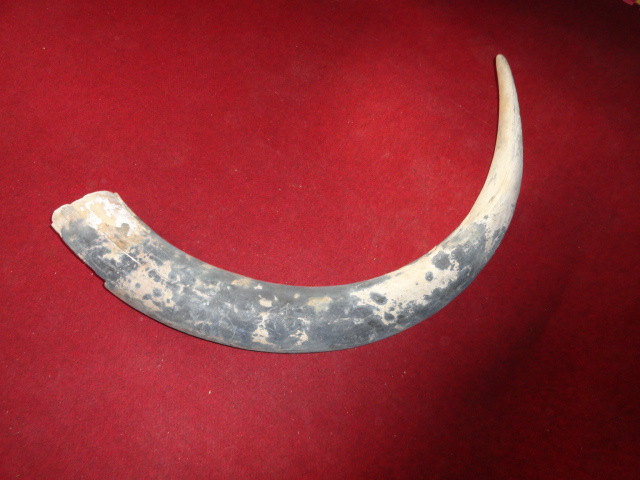
What we offer for saleWe specialize in ivory material from the Canadian arctic, but will carry other related materials as they are available. Whether for the collector or for further manufacture, we offer narwhal tusk, walrus tusk, walrus oosik (walrus baculum or penis bone), walrus and polar bear skulls, sperm whale teeth, mammoth ivory, pre-ban elephant ivory, muskox horns and whale baleen. We offer ivory for the carver, knife maker, jeweler, scrimshander, furniture maker and wood worker in either a natural or polished finish. Then there are just as many who appreciate the tusk itself as a natural art form without any processing. Whatever the need, there is a wide selection of this material available. With its dense, closed cell structure, ivory is popular for its tonal qualities in the making of musical instruments. Ivory is better than more porous bone or man-made materials in that it is able to transmit clear sound in the instrument. Mammoth, pre-ban elephant or walrus ivories are sought after for this purpose. We guarantee these materials. If your order does not meet your expectations upon arrival, return it right away and we will refund the purchase price. All you're out is the shipping charges.
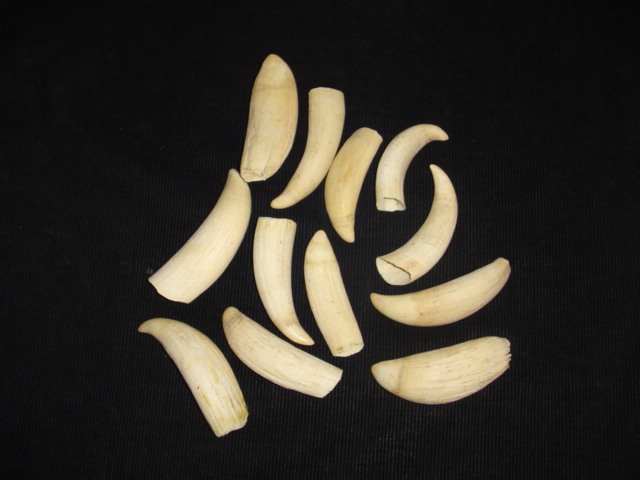
We Buy Ivory Tusks – Estate purchasesWe are pleased to bid on unworked legal ivory tusks from private collectors, estate sales, museums and private zoos. We are interested in Mammoth tusks, Hippo teeth, Antique documented Pre-ban elephant tusks, post ban but CITES documented post ban elephant as well as Sperm whale teeth.We do not purchase carved ivory and leave that business to private art galleries. We follow international CITES rules and the laws of Canada. That means we are only able to purchase and sell hippo, documented antique pre-ban and documented post-ban elephant and sperm whale teeth already in Canada.
For sales or pricing info, contact us at [email protected] |
Walrus Tusks - Odobenus rosmarus
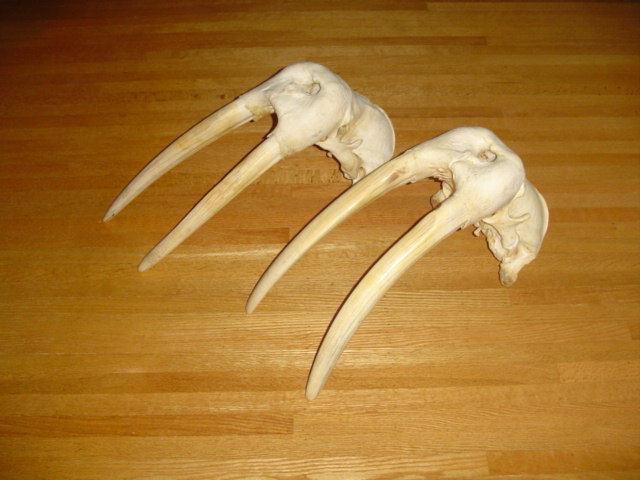
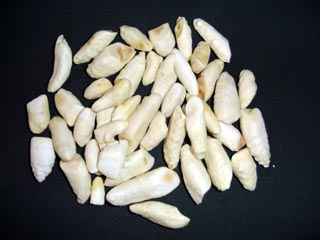
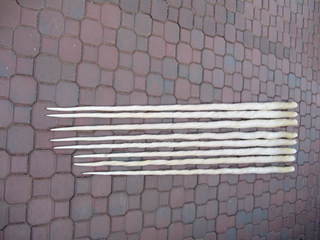
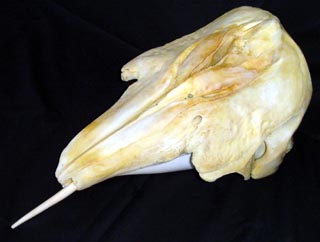
Tusks are formed on both the male and female walrus. The males tend to produce heavier set, more impressive tusks than the females. Their size lends them to larger sculptures and applications where larger piece size is an issue. A common size for males is 1.0 - 1.4 kg (2 to 3 lbs) with a length of 40 cm (16 to 19") and a base cross section of 3 by 6 cm (1.25 by 2.5"). The female tusks are more slender and have less taper going from the base to the tip. Typically, the length of female walrus tusks is similar to a male but the base is more round than oval, say 4 cm (1.5") diameter, and the weight runs 0.5 to 1.0 kg (1 to 2 lbs.)
Narwhal Tusk - Monodon monoceros
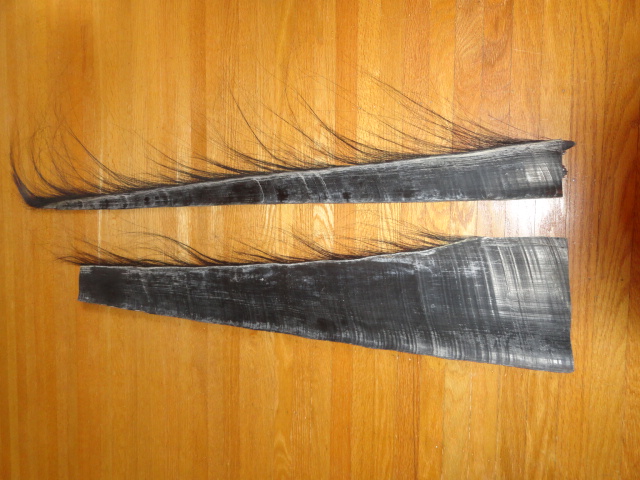
Whale Baleen - Bowhead whale - Balaena mysticetus
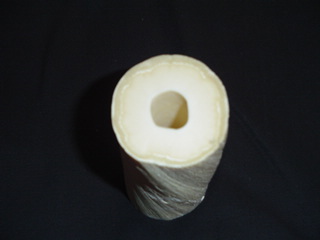
Mammoth Tusk
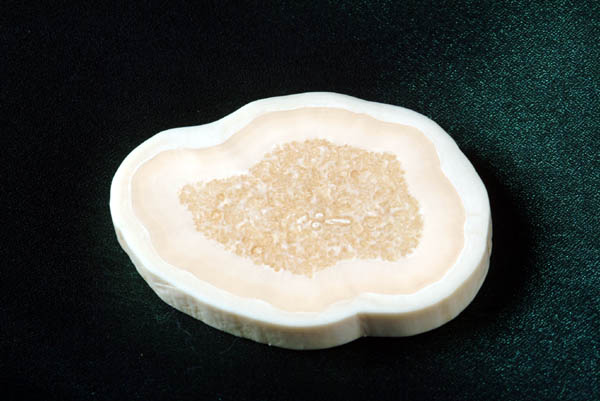
Being an extinct species, we can ship to most countries with no permit required. Both mammoth and elephant ivory exhibit a characteristic zig-zag or diamond shaped grain in cross section called Shreger lines. It is the angle of this grain which determines which of these 2 species the ivory is from.
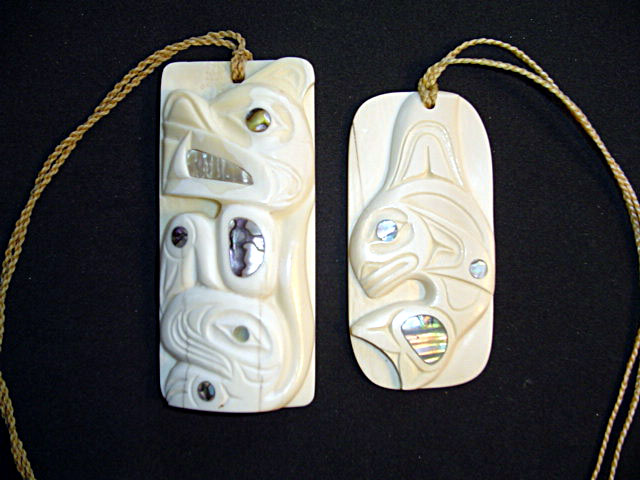
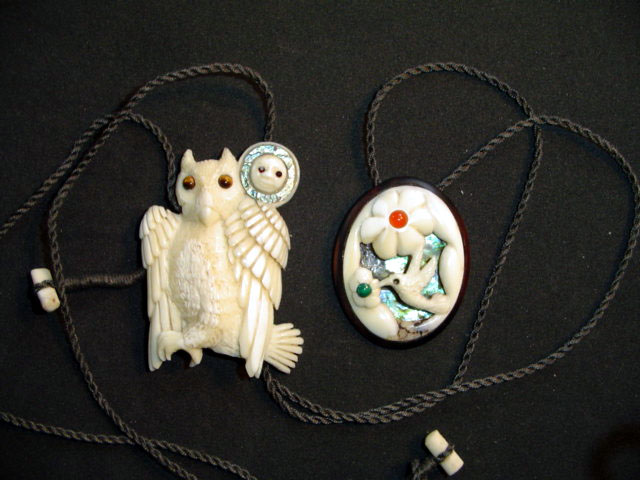
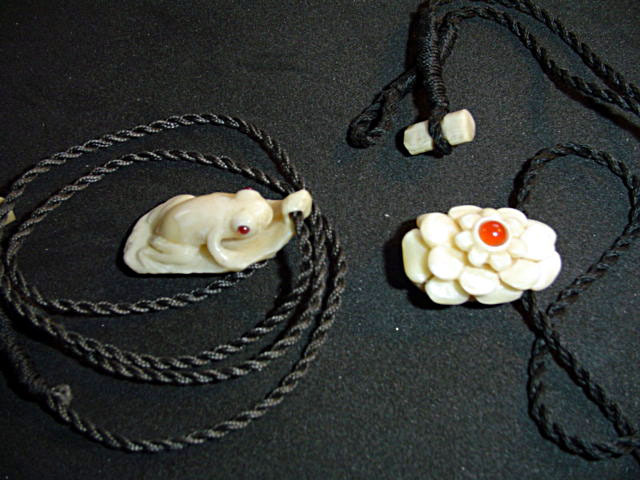
Pre-ban Elephant TuskNONE IN STOCK AT THE MOMENT Pre-ban elephant ivory is that ivory which entered Canada prior to July 1975. In that year, Canada signed onto CITES wherein international trade was heavily regulated. Since 1975, hunting trophy tusks are able to enter Canada provided that the host country where the tusks were obtained is willing to offer a CITES export permit and Canada is willing to offer a CITES import permit. We respect the current conservation work of groups to maintain elephant populations in various locations of the world and we will not entertain handling illegal ivory. That’s important. It is legal to own, trade and ship pre-ban elephant ivory within Canada; post ban with permits. International trade or transporting pre-ban elephant ivory outside Canada is not permitted. Ivory ArtI really enjoy seeing ivory art. Over the years I’ve been privileged to meet some excellent artists. I found that art, as excellent as it may be, doesn’t sell well on the internet so I discontinued it.
Working with IvoryWorking with ivory can be done with some of the same tools and methods as woodworking. Primary cuts are made with a bandsaw with ¼ to ½” blades and tooth counts of 8 to 10 teeth per inch. If there’s not too much to cut, a hack saw or even a fine toothed cross cut wood saw will work just fine. Use a finer tooth count, say 14 to 18 tpi, for subsequent cuts on the same band saw or use a jeweler’s saw. I will often apply a little Welbond glue to the end grain freshly after a cut. I’ve found ivory to be abrasive to tools and it pays to invest in quality blades. Be careful to keep your saw blades sharp and don’t apply too much pressure as you cut. It's ok to take your time. Too much pressure with a duller blade and you’ll see your cut ‘wander’ off its intended path. Sanding with a bench mounted belt sander works well by working the grits up to final hand sanding of 400 to 600. I suggest that you start at around 100 to 120. Too coarse and the scratches will be tough to work out of the surface. Take your time in moving up the grits or you’ll have to back-peddle your grit to remove lines from a coarser grit. Where carving is considered, a ‘dremel’ type tool works well. Small cracks can be filled with epoxy mixed with ivory dust and then sanded smooth. That’s an old carver’s trick. For both cutting and sanding I use a vacuum system attached to the tools and I usually wear some form of eye and respiratory protection. While I’ve not heard of ivory being particularly toxic, it just makes sense to not expose oneself to the dust as part of a healthy industrial hygiene regime. The more the exposure the more the importance. I know some carvers who use a fan behind them or to one side as they work along with a dust mask. If I can work outside, I do. After sanding, a choice of a matt finish can be made, perhaps augmented with some fine steel wool. It’s amazing what steel wool will do. That’s my personal preference for a finish. Alternatively, there are a number of jeweler rouges available from lapidary shops that can be applied with a cloth wheel mounted with on a bench grinder to provide a glossy finish. Ensure you use white rouge and a white cloth wheel, or the colour can transfer to your work and be difficult to remove. The primary enemy to working with ivory is a build up of heat resulting in the surface taking on a chalky look. If the piece gets too warm to comfortably hold, it’s too hot. Be particularly cautious in this respect with sanding. There is a lot of controversy over ‘stabilizing’ ivory. Some swear by it and others don’t. Stabilizing is simply removing very slight residual moisture using low heat or a vacuum from the ivory and replacing it with an oil or a resin. There are some home-made and professional remedies available. Where it’s of more importance is where the ivory is backed onto some other material, such as metal in a knife handle, where differential expansion from heat could possibly lead to difficulties. Alternatively, in this case use an attachment system with some ‘give’ in it. Where the ivory is occasionally wet (eg on knife handles) is cause to consider stabilizing. If you would like further information, I suggest that you make contact through your local knife making guild. Gemological properties of ivory vary somewhat by species. For elephant ivory, Makeup: 65-70% hydroxyapatite CA5(PO4)3OH plus collagen and elastin proteins; hardness 2.5 to 2.75; specific gravity 1.7 to 2.0 |
||||||||||||||||||||||||||||
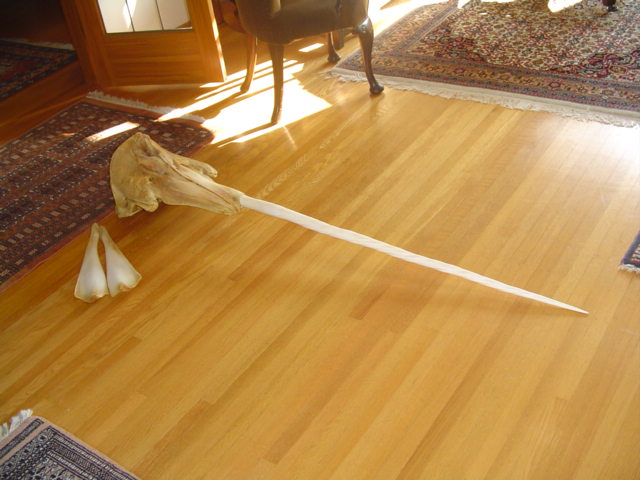
RegulationsThe walrus and narwhal are primarily hunted for their meat by the Inuit of northern Canada. This hunt is tightly regulated by the Department of Fisheries and Oceans and pilot projects are providing more local autonomy. The tusks provide a secondary resource and source of cash and are not the primary objective of the hunt. The tusks have historical significance in providing the medium for the creation of implements, toys and religious objects. Trade in this ivory and its ownership is legal within Canada. International trade of the tusks is possible and controlled by permit under the auspices of the ‘Convention on International Trade in Endangered Species of Wild Fauna and Flora’ (CITES). By international agreement, Canada can issue a CITES Export Permit which will be recognized by those other countries which allow such imports. The normal permit process commences with an application to Canadian CITES authorities for an Export Permit. When issued, that permit is faxed or emailed to the customer in order that an application can be made to the CITES authorities of the importing country for a CITES Import Permit. When the Import Permit is issued we can ship. Notably the United States restricts imports of marine mammal material. We cannot ship this to the United States. However mammoth tusk and muskox horn shipments to the U.S. have gone smoothly to date. No permits needed. Of late, 5 states have started restricting mammoth slab imports. Ordering these MaterialsIf you’d like to order or for inquiries about pricing on any of these materials, please call or write: Email: [email protected] |
Canadian Ivory Inc. |
 |
| www.cites.org | There are 2 particular documents which may be of interest:
|
| www.shanewilson.com | Sculptor of antlers. |
| www.luth.org | Making and repairing stringed instruments. |